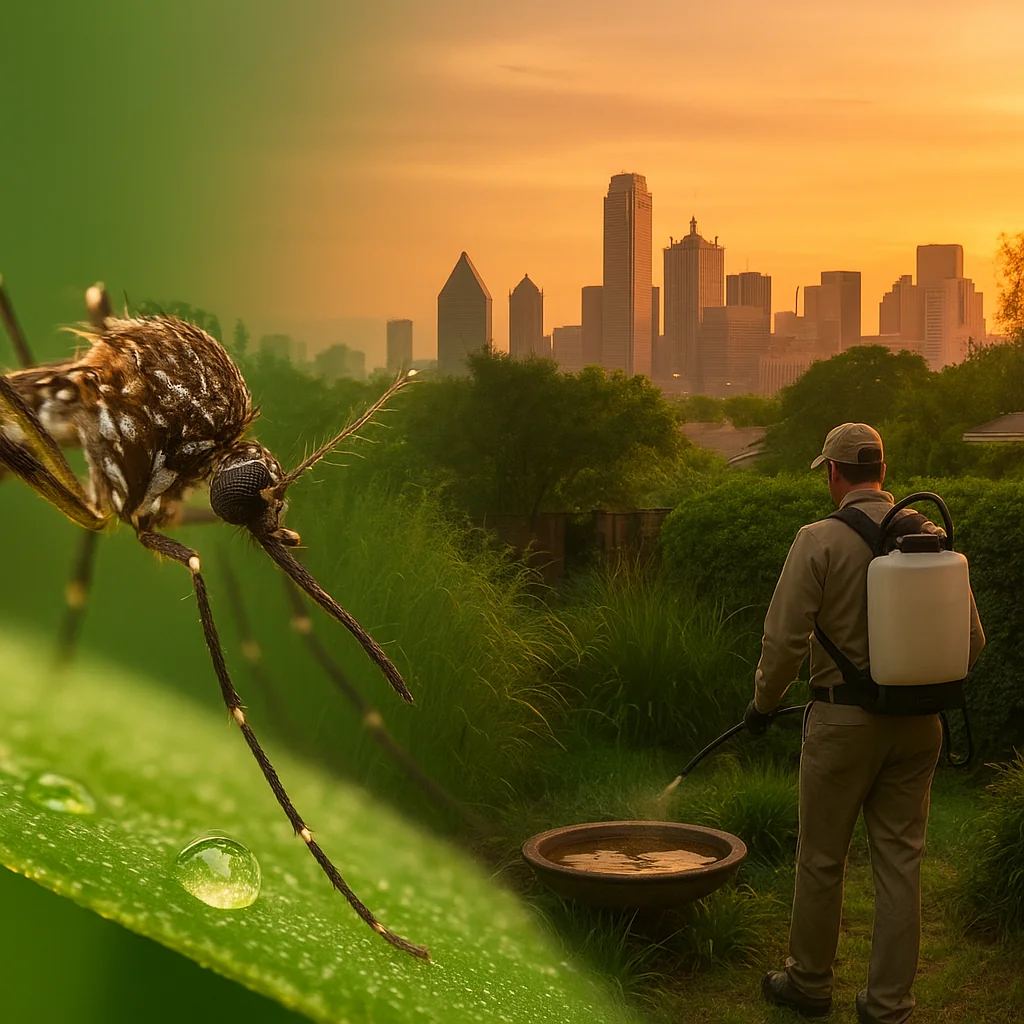
Why Mosquitoes Are Thriving Across Dallas Right Now
Dallas summers create the perfect storm for mosquitoes with consistent high humidity warm temperatures and abundant standing water from afternoon thunderstorms. These local climate and environmental factors allow multiple mosquito species to breed rapidly turning backyards parks and commercial properties into breeding hotspots. Professional perimeter treatment has become essential for residents seeking relief from relentless biting and potential disease transmission.
Understanding Dallas’s Mosquito-Friendly Climate
The Dallas-Fort Worth metroplex sits in a humid subtropical climate zone that offers ideal conditions for mosquitoes to flourish from early spring through late fall. Average summer temperatures hover between 85°F and 95°F while relative humidity frequently exceeds 70 percent. These warm moist conditions accelerate mosquito metabolism reproduction cycles and overall activity levels.
Unlike drier western regions Dallas receives approximately 37 inches of annual rainfall with most precipitation arriving as short intense thunderstorms. This pattern creates countless temporary water pools in both urban and suburban landscapes. Even brief showers can leave behind puddles in poorly drained areas that remain long enough for mosquito eggs to hatch and complete their life cycle.
Winters in Dallas rarely produce sustained freezes long enough to kill overwintering mosquito eggs or larvae. This mild seasonal transition allows populations to rebound quickly each spring. Climate data from the National Weather Service shows Dallas has experienced increasingly mild winters over the past decade contributing to higher baseline mosquito numbers year after year.
Key Environmental Factors Driving Local Mosquito Populations
Beyond broad climate patterns several specific environmental characteristics make Dallas particularly hospitable to mosquitoes. The area’s expansive network of rivers creeks and man-made waterways provides abundant breeding sites. The Trinity River and its tributaries create extensive floodplains where water often collects in low-lying areas.
Urban development throughout Dallas has created numerous artificial water collection points. Flat commercial rooftops clogged gutters and poorly graded parking lots all capture rainwater. Residential properties frequently have similar issues with birdbaths flowerpot saucers and children’s toys holding water for days after rain.
The combination of clay-heavy soils in many Dallas neighborhoods slows natural drainage. When precipitation occurs water tends to pool rather than soak into the ground quickly. This standing water becomes prime real estate for female mosquitoes seeking places to lay eggs. Properties in Uptown Dallas and surrounding neighborhoods often face heightened challenges due to dense building patterns and limited green space for natural water absorption.
Common Mosquito Species Found in Dallas
Dallas hosts several mosquito species each with unique breeding preferences and biting behaviors. The Yellow Fever Mosquito (Aedes aegypti) thrives in urban environments preferring to breed in small containers of water around homes. This species is particularly aggressive and often bites during daylight hours.
The Asian Tiger Mosquito (Aedes albopictus) has become increasingly prevalent throughout North Texas. Recognizable by its distinctive white stripes this species adapts well to both residential and wooded areas. It can breed in extremely small amounts of water making it difficult to eliminate through source reduction alone.
Culex mosquitoes which transmit West Nile Virus are abundant in Dallas due to the area’s many drainage ditches and retention ponds. These mosquitoes typically breed in water with high organic content and are most active during dusk and dawn. Their ability to fly significant distances allows them to impact large areas from a single breeding site.
Understanding these different species helps explain why comprehensive mosquito control Dallas strategies must address multiple breeding preferences and activity patterns simultaneously.
How Dallas Weather Patterns Fuel Mosquito Breeding
Dallas weather creates distinct seasonal pulses in mosquito activity. Spring rains followed by warming temperatures trigger the first major population surge. A single female mosquito can lay up to 300 eggs in a small puddle and those eggs can hatch within 24 to 48 hours in warm conditions.
The life cycle from egg to adult can complete in as little as seven days during peak summer heat. This rapid reproduction allows exponential population growth following each significant rainfall. A single breeding site can produce thousands of new mosquitoes within two weeks.
Humidity plays a crucial role beyond simply providing water sources. Mosquitoes lose moisture through their exoskeletons and require humid conditions to prevent dehydration. Dallas summer humidity levels rarely drop low enough to stress mosquito populations allowing them to remain active throughout the day and night.
Evening temperatures that remain above 75°F enable continued mosquito activity after sunset when most residents want to enjoy their outdoor spaces. This combination of factors explains why many Dallas neighborhoods experience peak mosquito pressure from June through September.
The Role of Urban Development in Mosquito Proliferation
Rapid growth throughout the Dallas metroplex has inadvertently created ideal mosquito habitat. New construction often disturbs natural drainage patterns creating low spots where water collects. Construction sites with temporary drainage issues can produce massive mosquito hatches affecting surrounding neighborhoods.
Mature landscaping in established neighborhoods provides shade that keeps water cooler and more attractive for breeding. Dense tree canopies in areas like Downtown Dallas and surrounding historic districts reduce evaporation rates allowing water to remain in containers and depressions longer.
Many newer developments feature retention ponds designed to manage stormwater runoff. While beneficial for flood control these ponds often become permanent mosquito breeding sites if not properly maintained. Without regular larval control treatment these features can sustain large mosquito populations that spread into nearby residential areas.
Public Health Implications of Dallas Mosquito Populations
Beyond being a nuisance Dallas mosquitoes pose genuine public health concerns. West Nile Virus remains the primary mosquito-borne illness in North Texas with periodic outbreaks occurring when environmental conditions favor virus amplification in bird populations. The Texas Department of State Health Services has documented numerous human cases within Dallas County in recent years.
Other potential diseases include Zika virus dengue and chikungunya though these occur less frequently. The presence of competent vector species combined with Dallas’s subtropical climate creates conditions where these diseases could establish if introduced by infected travelers.
Commercial properties face additional challenges as high mosquito activity can impact customer satisfaction employee productivity and even lead to liability concerns. This has driven increased demand for professional commercial mosquito control services across the city.
Effective Strategies for Managing Mosquitoes in Dallas
Successful mosquito management in Dallas requires addressing both adult mosquitoes and their aquatic larvae. Source reduction remains the foundation of any effective program. Residents should regularly inspect their properties for containers that collect water eliminating these breeding sites whenever possible.
For areas where standing water cannot be eliminated professional larval control becomes essential. These targeted treatments focus on water sources that produce the next generation of mosquitoes. When combined with barrier treatments that create protective zones around living areas this approach significantly reduces biting pressure.
Timing is critical in Dallas’s climate. Treatments must be applied proactively before population surges rather than reactively after residents are already being overwhelmed. Regular service schedules that account for weather patterns and mosquito life cycles provide the most consistent results.
Integrated pest management approaches that combine multiple strategies tend to be most effective. This includes vegetation management to reduce resting areas proper drainage improvements and strategic use of EPA-approved products that minimize impact on beneficial insects and the environment.
Seasonal Mosquito Patterns in the Dallas Area
Mosquito activity in Dallas follows predictable seasonal patterns that residents can use to anticipate and prepare for peak pressure periods. Early spring sees the emergence of overwintering species often following the first sustained warm weather in March or April.
The most intense activity typically occurs from late May through early October when temperatures and rainfall create optimal breeding conditions. June and September often prove particularly challenging as heavy rains followed by hot sunny days accelerate development rates.
Late fall activity decreases as temperatures drop but rarely disappears completely until after the first hard freeze. This extended season compared to more northern regions means Dallas residents need mosquito protection strategies for nearly eight months of the year.
Understanding these patterns helps explain why consistent professional intervention provides better results than occasional do-it-yourself treatments. Properties that maintain year-round service programs experience dramatically fewer problems during peak seasons.
Local Environmental Changes Affecting Mosquito Populations
Recent environmental shifts in North Texas have contributed to changing mosquito dynamics. Urban heat island effects in densely developed areas like downtown districts create microclimates that remain several degrees warmer than surrounding rural areas. These elevated temperatures accelerate mosquito development and extend daily activity periods.
Changing precipitation patterns with more frequent extreme rainfall events create boom-and-bust cycles in mosquito populations. Heavy downpours that overwhelm drainage systems leave behind numerous breeding sites while drought periods concentrate mosquitoes around remaining water sources.
Land use changes throughout the region have reduced natural predators that once helped control mosquito numbers. Loss of wetland habitats and widespread pesticide use have impacted dragonfly bat and bird populations that consume significant numbers of mosquitoes.
These factors underscore the importance of professional expertise in developing effective management strategies tailored to current local conditions rather than generic approaches that may have worked in the past.
Practical Tips for Dallas Property Owners
Dallas homeowners and businesses can take several steps to reduce mosquito pressure on their properties. Begin by conducting a thorough inspection after each rainfall looking for any containers or depressions holding water. Empty standing water from flower pots buckets toys and other items at least weekly.
Improve drainage around your property by ensuring gutters are clean and downspouts direct water away from foundations. Consider grading low areas to prevent pooling. For permanent water features like ponds install pumps or fish that consume mosquito larvae.
Trim vegetation to reduce shaded moist areas where adult mosquitoes rest during daylight hours. Choose landscape plants carefully avoiding those that collect water in their leaves or flowers. Maintain lawns at appropriate heights to minimize thatch that can harbor mosquitoes.
When selecting professional services look for companies that understand local conditions and offer comprehensive programs addressing both larval and adult mosquitoes. The most effective solutions combine regular monitoring targeted treatments and ongoing prevention strategies customized for Dallas climate patterns.
The Science Behind Effective Mosquito Control
Modern mosquito control relies on scientific understanding of insect biology and ecology. Products used in professional applications target specific aspects of mosquito physiology minimizing impact on non-target organisms. Larvicides prevent development in water while adulticides create barriers that repel or kill mosquitoes on contact.
Monitoring techniques allow technicians to identify which species are most active in specific areas and adjust treatment protocols accordingly. This precision approach reduces unnecessary applications while improving overall effectiveness.
Research continues into new control methods including biological agents that target mosquito larvae without affecting other aquatic life. Some programs incorporate sterile insect techniques or genetic modifications though these remain largely experimental for residential applications.
For Dallas property owners working with knowledgeable professionals who stay current with these scientific advances provides access to the most effective and environmentally responsible solutions available.
Leave a Reply